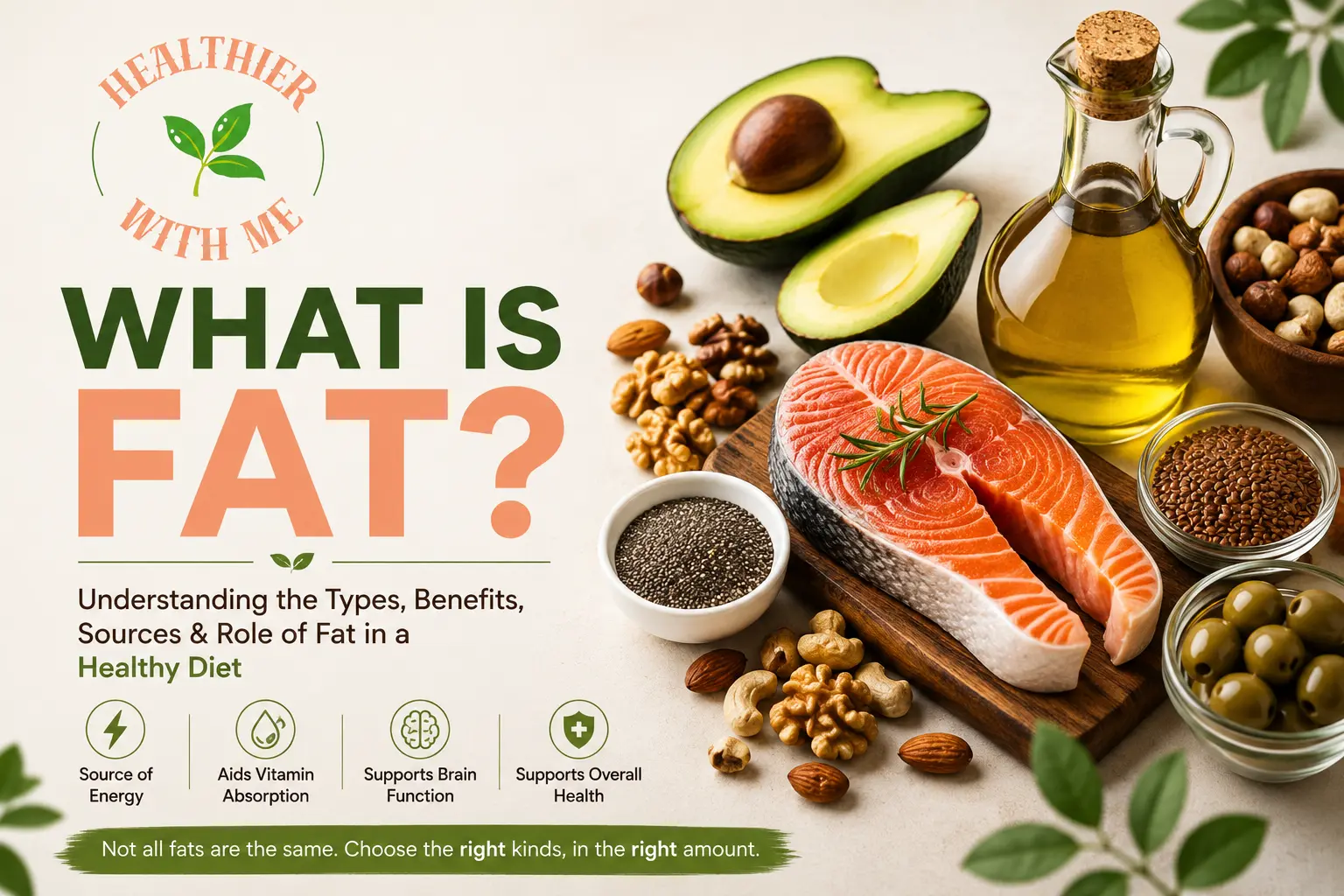
For years, fat has been labelled as something to avoid, but dietary fat is actually an essential nutrient that supports energy production, hormone function, brain health, cell structure, and the absorption of vitamins. The real question is not whether you should eat fat, but which fats you choose and how much you consume. This is particularly relevant in India, where cardiovascular disease remains a major health concern: WHO India reports that cardiovascular disease accounts for around 27% of deaths from non-communicable diseases in the country.
In this guide, we’ll break down what fat is, the different types of dietary fat, how fat works in the body, healthy and less healthy sources, how much you need, and how fat can affect heart health and weight management.
In this blog, we’ll take a simple look at what fat is, the different types of fat, how it works in the body, how much you need, and which sources are better choices for your health.
Testimonial
Our Results
We know you need some thing to trust.

I have gained 22 kg of weight gain and improved my immunity with the help of this program. It only took 6 months to see this transformation.

thank you so much for your guide i was able to loss 12 kg fat loss in 3 months. I had never felt this lighter before.

Being a business owner i have very busy schedule which made me gain fat over period of time. once i started this program I lost 22 kg fat in 4 months.
Table of Contents
What Is Fat? (Quick Definition)
Fat is one of the three main macronutrients, alongside protein and carbohydrates. It provides energy, helps the body absorb certain vitamins, supports cell function, and plays important roles in hormones and overall health. Dietary fat is found naturally in foods such as nuts, seeds, oils, dairy, eggs, fish, meat, and avocados.
Fat vs Lipids vs Triglycerides – Clearing Up the Terms
- Lipids: A broad group of fat-like substances that includes fats, oils, cholesterol and phospholipids.
- Fat: A type of lipid commonly found in food and stored in the body as an energy reserve.
- Triglycerides: The main form of fat found in foods and stored in body fat. They are made from three fatty acids attached to one glycerol molecule.
- In simple terms: Lipids are the broader group, while fats and triglycerides are specific types within that group.
Fat as a Macronutrient (vs Protein & Carbohydrates)
Fat, protein, and carbohydrates are the body’s three main macronutrients, meaning they are needed in relatively large amounts. Fat provides about 9 calories per gram, compared with around 4 calories per gram from protein and carbohydrates. Unlike carbohydrates and protein, fat also helps the body absorb the fat-soluble vitamins A, D, E, and K.
What Is Fat Made Of?
Dietary fat is made up mainly of fatty acids and other molecules that determine its structure and properties. Understanding these building blocks makes it easier to see why different fats behave differently in the body and why some are liquid while others are solid at room temperature.
Fatty Acids Explained
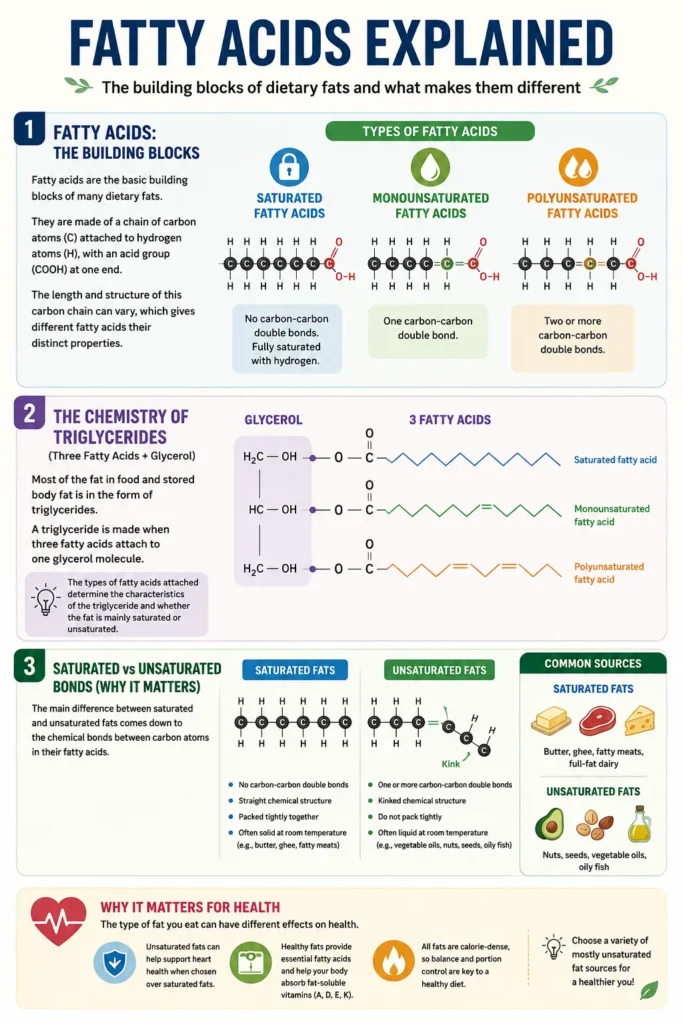
Fatty acids are the basic building blocks of many dietary fats. They are made of a chain of carbon atoms attached to hydrogen atoms, with an acid group at one end. The length and structure of this carbon chain can vary, which gives different fatty acids their distinct properties.
Fatty acids are commonly classified as saturated, monounsaturated, or polyunsaturated, depending on the bonds between their carbon atoms. These differences affect how the fat behaves and how it is classified nutritionally.
The Chemistry of Triglycerides (Three Fatty Acids + Glycerol)
Most of the fat in food and stored body fat is in the form of triglycerides. A triglyceride is made when three fatty acids attach to one glycerol molecule.
You can think of glycerol as the central framework and the three fatty acids as chains attached to it. The types of fatty acids attached determine the characteristics of the triglyceride and whether the fat is mainly saturated or unsaturated.
Saturated vs Unsaturated Bonds (Why It Matters)
The main difference between saturated and unsaturated fats comes down to the chemical bonds between carbon atoms in their fatty acids.
- Saturated fats: Have no carbon-carbon double bonds, so the carbon chain is fully saturated with hydrogen.
- Monounsaturated fats: Have one carbon-carbon double bond.
- Polyunsaturated fats: Have two or more carbon-carbon double bonds.
These differences affect the structure of the fat. Saturated fats are often solid at room temperature, while many unsaturated fats are liquid. Common sources of unsaturated fats include nuts, seeds, vegetable oils, and oily fish, while saturated fats are commonly found in foods such as butter, ghee, fatty meats, and some full-fat dairy products.
Understanding these differences is important because the type of fat you eat can have different effects on health, particularly when unsaturated fats replace some saturated fats in the diet.
Types of Fat
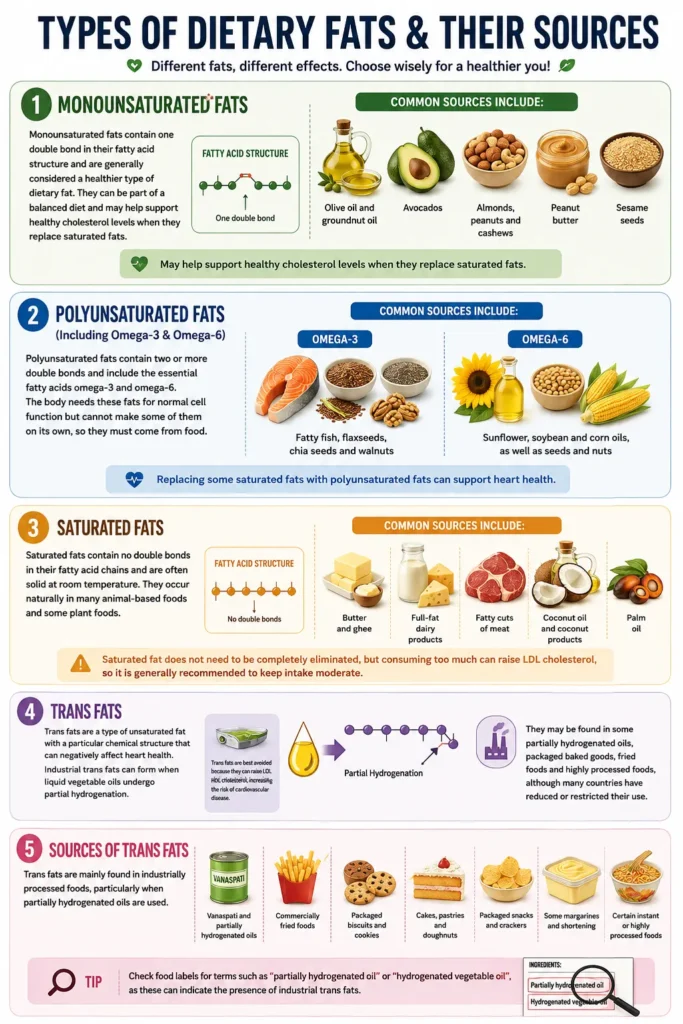
Not all dietary fats are the same. They differ in their chemical structure, food sources, and effects on health. The four main types are monounsaturated, polyunsaturated, saturated, and trans fats.
Monounsaturated Fats
Monounsaturated fats contain one double bond in their fatty acid structure and are generally considered a healthier type of dietary fat. They can be part of a balanced diet and may help support healthy cholesterol levels when they replace saturated fats.
Common sources include:
- Olive oil and groundnut oil
- Avocados
- Almonds, peanuts and cashews
- Peanut butter
- Sesame seeds
Polyunsaturated Fats (Including Omega-3 & Omega-6)
Polyunsaturated fats contain two or more double bonds and include the essential fatty acids omega-3 and omega-6. The body needs these fats for normal cell function but cannot make some of them on its own, so they must come from food.
Common sources include:
- Omega-3: Fatty fish, flaxseeds, chia seeds and walnuts
- Omega-6: Sunflower, soybean and corn oils, as well as seeds and nuts
Replacing some saturated fats with polyunsaturated fats can support heart health.
Saturated Fats
Saturated fats contain no double bonds in their fatty acid chains and are often solid at room temperature. They occur naturally in many animal-based foods and some plant foods.
Common sources include:
- Butter and ghee
- Full-fat dairy products
- Fatty cuts of meat
- Coconut oil and coconut products
- Palm oil
Saturated fat does not need to be completely eliminated, but consuming too much can raise LDL cholesterol, so it is generally recommended to keep intake moderate.
Trans Fats
Trans fats are a type of unsaturated fat with a particular chemical structure that can negatively affect heart health. Industrial trans fats can form when liquid vegetable oils undergo partial hydrogenation.
They may be found in some partially hydrogenated oils, packaged baked goods, fried foods and highly processed foods, although many countries have reduced or restricted their use.
Trans fats are best avoided because they can raise LDL cholesterol while lowering HDL cholesterol, increasing the risk of cardiovascular disease.
Sources of Trans Fats
Trans fats are mainly found in industrially processed foods, particularly when partially hydrogenated oils are used. Common sources include:
- Vanaspati and partially hydrogenated oils
- Commercially fried foods
- Packaged biscuits and cookies
- Cakes, pastries and doughnuts
- Packaged snacks and crackers
- Some margarines and shortening
- Certain instant or highly processed foods
Tip: Check food labels for terms such as “partially hydrogenated oil” or “hydrogenated vegetable oil”, as these can indicate the presence of industrial trans fats.
Essential vs Non-Essential Fatty Acids
Fatty acids are often classified as essential or non-essential based on whether the body can make them on its own. Understanding this difference helps explain why certain fats need to come from your diet.
What Makes a Fat “Essential”?
An essential fatty acid is a fatty acid that the body cannot produce in sufficient amounts, so you must get it from food. The two essential fatty acids are linoleic acid (omega-6) and alpha-linolenic acid (omega-3).
Non-essential fatty acids can be produced by the body, although they may also be obtained from food. Essential does not mean that one type of fat is automatically healthier; it simply means the body needs to obtain it from the diet.
Omega-3 Sources
Omega-3 fatty acids are a group of polyunsaturated fats involved in cell function, brain health and other important processes. Good dietary sources include:
- Fatty fish such as salmon, sardines and mackerel
- Flaxseeds and chia seeds
- Walnuts
- Soybeans and soy products
- Omega-3-fortified foods
Plant foods mainly provide ALA (alpha-linolenic acid), while fatty fish provide EPA and DHA, which are forms the body can use more directly.
Omega-6 Sources
Omega-6 fatty acids, particularly linoleic acid, are also essential for normal growth, development and cell function. They are widely available in everyday foods.
Common sources include:
- Sunflower oil
- Soybean oil
- Corn oil
- Sesame seeds and sesame oil
- Sunflower seeds
- Peanuts and other nuts
Most people can obtain enough omega-6 from a varied diet, so the focus should be on choosing a balanced mix of healthy fat sources rather than avoiding omega-6 foods altogether.
What Does Fat Do in the Body? (Functions)
Fat is more than just a source of calories. It plays several important roles in the body, from storing energy and protecting organs to helping absorb vitamins and supporting healthy cells.
Energy Storage (9 Calories Per Gram)
Fat is the most energy-dense macronutrient, providing about 9 calories per gram, compared with 4 calories per gram from protein and carbohydrates. When the body has more energy than it needs immediately, some of that excess energy can be stored as body fat and used later.
Cushioning & Insulating Organs
Body fat provides a protective layer around some organs, helping cushion them from physical impact. Fat stored beneath the skin also acts as insulation, helping the body retain heat and maintain a stable temperature.
Absorbing Fat-Soluble Vitamins (A, D, E, K)
Dietary fat helps the body absorb the fat-soluble vitamins A, D, E and K from food. Including a source of healthy fat in a meal can therefore help with the absorption and use of these important vitamins.
Building Cell Membranes
Fat is an important component of cell membranes, which surround and protect every cell in the body. Certain fatty acids help maintain the structure and flexibility of these membranes, allowing cells to communicate and function properly.
Hormone Production
Fats, particularly certain fatty acids and cholesterol, are involved in producing and regulating hormones and other signalling molecules. These substances help coordinate processes such as metabolism, reproduction, immune responses and inflammation.
Satiety – Why Fat Keeps You Full
Fat takes longer to digest than carbohydrates and can help slow the movement of food through the stomach, which may contribute to feelings of fullness after a meal. Including moderate amounts of healthy fats such as nuts, seeds, avocado and vegetable oils can make meals more satisfying.
Fat and Cholesterol
Fat and cholesterol are closely related, but they are not the same thing. Understanding the difference can make it easier to understand how the fats in your diet may affect your blood cholesterol and heart health.
Dietary Cholesterol vs Blood Cholesterol
- Dietary cholesterol: Cholesterol naturally found in animal-based foods such as eggs, meat, seafood and dairy.
- Blood cholesterol: Cholesterol circulating in your bloodstream, which is influenced by your body’s own production, diet, genetics and other lifestyle factors.
- The key difference: Eating cholesterol-containing foods does not always directly translate into higher blood cholesterol. For many people, the type and amount of dietary fat have a greater effect.
LDL vs HDL – “Bad” vs “Good” Cholesterol
Cholesterol travels through the bloodstream attached to proteins called lipoproteins. The two most commonly discussed types are:
| Type | Full form | Common name | What it does |
| LDL | Low-Density Lipoprotein | “Bad” cholesterol | Carries cholesterol from the liver to tissues. High LDL levels can contribute to plaque buildup in the arteries. |
| HDL | High-Density Lipoprotein | “Good” cholesterol | Helps carry excess cholesterol back to the liver, where it can be processed and removed. |
In simple terms: LDL can contribute to cholesterol buildup in the arteries when levels are too high, while HDL helps transport excess cholesterol away from the bloodstream.
Does Eating Fat Raise Your Cholesterol?
It depends on the type of fat you eat. Diets high in saturated and trans fats can raise LDL cholesterol, while replacing some saturated fat with unsaturated fats can help improve the cholesterol profile.
Foods such as nuts, seeds, fish, avocados and vegetable oils are generally better sources of fat than foods high in trans fats or large amounts of saturated fat.
How Much Fat Do You Need Per Day?
Fat is an essential part of a balanced diet, but the amount you need depends on your total calorie intake, age, activity level and overall health. Rather than trying to avoid fat completely, focus on getting an appropriate amount from a variety of nutritious sources.
Recommended Fat Intake (% of Daily Calories)
For most adults, 20–35% of total daily calories can come from fat. For someone eating 2,000 calories a day, this works out to roughly 44–78 grams of fat per day.
The quality of the fat matters too. Prioritise unsaturated fats from foods such as nuts, seeds, fish, avocados and vegetable oils, while limiting saturated and trans fats.
How Much Saturated Fat Is Too Much?
Saturated fat should make up only a smaller portion of your total fat intake. Many dietary guidelines recommend keeping saturated fat to less than 10% of daily calories.
For a 2,000-calorie diet, that is less than about 22 grams of saturated fat per day. If you have high cholesterol or certain heart-health concerns, a healthcare professional may recommend a lower amount.
Fat Needs by Life Stage & Activity Level
Fat needs vary depending on age, growth, activity level and individual energy requirements. Here’s a simple overview:
| Life Stage / Activity | Fat Needs & Role |
| Adults | Around 20–35% of daily calories can come from fat as part of a balanced diet. |
| Children | Adequate fat supports growth, brain development and overall development. |
| Pregnancy | Fat provides energy and supports the absorption of fat-soluble vitamins and essential fatty acids. |
| Athletes | Fat provides concentrated energy, while overall needs depend on training intensity and calorie requirements. |
| Older Adults | Healthy fats can provide energy and nutrients, particularly when appetite or food intake is lower. |
Is a High-Fat Diet (Like Keto) Safe?
A high-fat diet such as the ketogenic (keto) diet can be appropriate for some people under the right circumstances, but it is not automatically healthier than a balanced diet. Keto diets drastically reduce carbohydrates and replace much of that energy with fat.
If following a high-fat diet, the quality of the fat still matters. Choosing nuts, seeds, fish, avocados and unsaturated oils is generally preferable to relying heavily on butter, processed meats and other foods high in saturated fat. People with medical conditions or specific nutritional needs should speak with a healthcare professional before making major dietary changes.
Best Sources of Fat
Not all fat sources offer the same nutritional value. A good approach is to include a variety of unsaturated fats from whole and minimally processed foods while keeping saturated fat moderate and avoiding industrial trans fats.
Sources of Monounsaturated Fat
Monounsaturated fats are commonly found in plant-based foods and oils. Good sources include:
- Avocados
- Peanuts and peanut butter
- Almonds, cashews and other nuts
- Sesame seeds
- Olive oil
- Groundnut (peanut) oil
Sources of Polyunsaturated Fat
Polyunsaturated fats include essential omega-3 and omega-6 fatty acids. Good sources include:
- Fatty fish such as salmon, sardines and mackerel
- Chia seeds
- Flaxseeds
- Walnuts
- Sunflower seeds
- Soybeans and soybean oil
- Sunflower and other seed oils
Sources of Saturated Fat
Saturated fat occurs naturally in many animal-based and some plant-based foods. Common sources include:
- Ghee and butter
- Full-fat milk, cheese and other dairy products
- Fatty cuts of meat
- Coconut and coconut oil
- Palm oil
These foods do not necessarily need to be completely avoided, but large amounts of saturated fat should be limited as part of a heart-healthy diet.
Foods Containing Trans Fat (and Why to Avoid Them)
Industrial trans fats are mainly associated with partially hydrogenated oils and some highly processed foods. Sources can include:
- Vanaspati and shortening
- Some packaged biscuits and cookies
- Certain cakes, pastries and doughnuts
- Some commercially fried foods
- Certain packaged snacks and processed foods
Trans fats are best avoided because they can raise LDL cholesterol, lower HDL cholesterol and increase the risk of cardiovascular disease.
Good Fats vs Bad Fats – Is It Really That Simple?
The idea of “good fats” and “bad fats” can be useful as a starting point, but fat is more complicated than simply putting every type into one category. The overall food, portion size, and what a fat replaces in your diet can all matter.
Why “All Saturated Fat Is Bad” Is an Oversimplification
Saturated fat is not found in just one type of food. It occurs naturally in foods such as dairy, meat, coconut and other foods. While too much saturated fat can raise LDL cholesterol, its effect can vary depending on the overall diet and the food it replaces.
Rather than trying to eliminate every source of saturated fat, focus on moderation and include more unsaturated fats from foods such as nuts, seeds, fish, avocados and vegetable oils. Replacing some saturated fat with unsaturated fat can be a better approach for heart health.
Why “Low-Fat” Foods Aren’t Always Healthier
A food labelled “low-fat” is not automatically a healthier choice. When fat is removed, some products may contain added sugar, refined carbohydrates or other ingredients to maintain their taste and texture.
For example, a plain full-fat yoghurt and a low-fat flavoured yoghurt can have very different nutritional profiles. Instead of focusing only on the amount of fat, look at the whole nutrition label, including calories, added sugar, protein, fibre and ingredients.
The takeaway: Instead of avoiding all fat or choosing foods simply because they are labelled “low-fat”, focus on the quality and overall nutritional value of the food.
Health Benefits & Risks of Fat
Fat can support several important body functions, but its health effects depend largely on the type and amount of fat consumed. Including healthy fat sources in a balanced diet while limiting trans fats and excessive saturated fat can help support long-term health.
Heart Health & Fat Quality
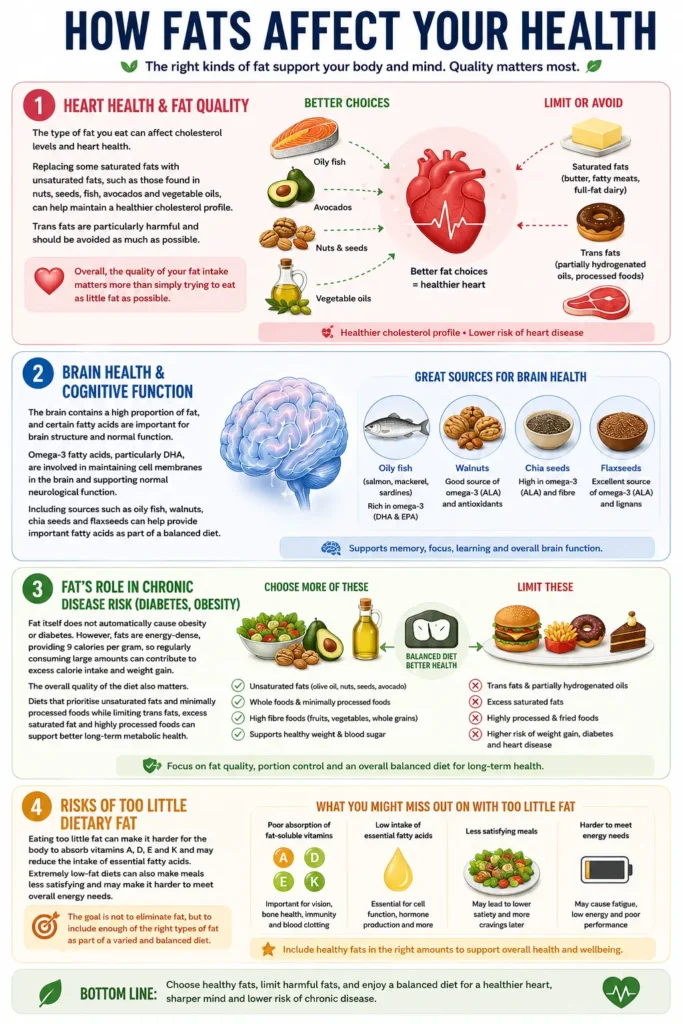
The type of fat you eat can affect cholesterol levels and heart health. Replacing some saturated fats with unsaturated fats, such as those found in nuts, seeds, fish, avocados and vegetable oils, can help maintain a healthier cholesterol profile.
Trans fats are particularly harmful and should be avoided as much as possible. Overall, the quality of your fat intake matters more than simply trying to eat as little fat as possible.
Brain Health & Cognitive Function
The brain contains a high proportion of fat, and certain fatty acids are important for brain structure and normal function. Omega-3 fatty acids, particularly DHA, are involved in maintaining cell membranes in the brain and supporting normal neurological function.
Including sources such as oily fish, walnuts, chia seeds and flaxseeds can help provide important fatty acids as part of a balanced diet.
Fat’s Role in Chronic Disease Risk (Diabetes, Obesity)
Fat itself does not automatically cause obesity or diabetes. However, fats are energy-dense, providing 9 calories per gram, so regularly consuming large amounts can contribute to excess calorie intake and weight gain.
The overall quality of the diet also matters. Diets that prioritise unsaturated fats and minimally processed foods while limiting trans fats, excess saturated fat and highly processed foods can support better long-term metabolic health.
Risks of Too Little Dietary Fat
Eating too little fat can make it harder for the body to absorb vitamins A, D, E and K and may reduce the intake of essential fatty acids. Extremely low-fat diets can also make meals less satisfying and may make it harder to meet overall energy needs.
The goal is not to eliminate fat, but to include enough of the right types of fat as part of a varied and balanced diet.
Common Fat Myths
Fat has often been blamed for weight gain and poor health, which has led to many misconceptions about how much fat we actually need. The truth is that fat is an essential nutrient, and its effect on health depends on the type, amount and overall quality of the diet.
| Myth | The Reality |
| Eating fat makes you fat. | Fat is calorie-dense, but eating fat alone does not automatically cause weight gain. Overall calorie intake and diet quality matter. |
| All fats are unhealthy. | Unsaturated fats from nuts, seeds, fish, avocados and vegetable oils can be part of a healthy diet. |
| Low-fat foods are always healthier. | Low-fat does not necessarily mean nutritious. Some products can contain added sugar or refined ingredients to replace the fat. |
| You should avoid saturated fat completely. | Saturated fat can be included in moderation, but excessive intake may raise LDL cholesterol. |
| Fat is bad for your heart. | The type of fat matters. Replacing some saturated and trans fats with unsaturated fats can support heart health. |
| Cholesterol in food always raises blood cholesterol. | Dietary cholesterol and blood cholesterol are different. The overall diet, genetics and other factors also influence blood cholesterol levels. |
| You need to avoid fat to lose weight. | Weight management depends mainly on overall calorie balance. Moderate amounts of healthy fat can make meals more satisfying. |
| All oils are unhealthy. | Many plant oils provide unsaturated fats and can be part of a balanced diet when used in appropriate amounts. |
| Fat has no nutritional value beyond calories. | Fat provides energy, helps absorb vitamins A, D, E and K, supports cell membranes and provides essential fatty acids. |
The key takeaway: You do not need to fear fat or remove it from your diet. Focus on choosing healthier fat sources, limiting trans fats and keeping portions appropriate for your individual needs.
How to Read Fat on a Nutrition Label
Nutrition labels can help you understand how much fat a food contains and where that fat comes from. Instead of looking only at the total fat number, check the serving size, saturated fat and trans fat to get a clearer picture of the food.
- Check serving size: The fat listed applies to the stated serving size. Eating two servings means you consume twice the listed amount.
- Look at total fat: This shows the total amount of fat in one serving, including saturated and unsaturated fats.
- Check saturated fat: Compare this with the daily value and try to limit foods that provide large amounts of saturated fat.
- Look for trans fat: Choose foods with little or no trans fat, and check the ingredient list for partially hydrogenated oils.
- Check the ingredient list: It can help identify the main sources of fat, especially in packaged foods.
- Consider the whole food: A food with more fat is not automatically unhealthy. Nuts, seeds and avocados, for example, contain fat along with other valuable nutrients.
Simple rule: Don’t judge a food by its total fat alone. Look at the type of fat, serving size, ingredients and overall nutritional value before deciding whether it fits into your diet.
Common Fat-Related Terms in Ingredient Lists
Ingredient lists can use technical terms for different types of fats and oils. Knowing a few of them can make packaged foods easier to evaluate.
| Term on the Label | What It Means |
| Partially hydrogenated oil | A major source of industrial trans fats. Avoid products containing this ingredient. |
| Hydrogenated oil | Oil that has been chemically altered to make it more solid or stable. Check whether it is partially hydrogenated, as this can indicate trans fat. |
| Saturated fat | A type of fat with no double bonds in its fatty acid structure. High intake can raise LDL cholesterol. |
| Polyunsaturated fat | A type of unsaturated fat that includes omega-3 and omega-6 fatty acids. |
| Monounsaturated fat | An unsaturated fat with one double bond, commonly found in nuts, seeds, avocados and some vegetable oils. |
| Shortening | A solid or semi-solid fat used in baked and processed foods. Its exact composition varies by product. |
| Vanaspati | A processed vegetable fat commonly used in some Indian foods. Traditionally, some vanaspati products contained industrial trans fats, so check the current nutrition and ingredient label. |
| Vegetable oil | A general term that can refer to oils such as soybean, sunflower, palm, corn or other plant oils. The specific oil is more informative when listed. |
| Palm oil | A plant oil relatively high in saturated fat. It is widely used in processed foods because of its stability. |
| Milk fat / butterfat | Fat naturally present in milk and dairy products, containing a significant proportion of saturated fat. |
Quick tip: If you’re checking a packaged food mainly for heart health, pay particular attention to trans fat, saturated fat, partially hydrogenated oils and the type of oil used. Also remember that an ingredient list should be considered alongside the nutrition panel rather than on its own.
The Bottom Line
Fat is an essential nutrient that the body needs for energy, vitamin absorption, cell function, hormone production and protection of organs. The goal is not to remove fat from your diet, but to understand the different types and choose the right sources in appropriate amounts.
Focus more often on unsaturated fats from foods such as nuts, seeds, fish, avocados and vegetable oils, while limiting excess saturated fat and avoiding trans fats. A balanced diet is about the overall quality of your food choices, not simply choosing foods labelled “low-fat” or “fat-free”.
FAQs About Fat
1. What are the different types of fat?
The four main types of dietary fat are monounsaturated, polyunsaturated, saturated, and trans fats, which differ in their structure, food sources, and effects on health.
2. Is fat bad for you?
No, fat is an essential nutrient; the key is choosing more unsaturated fats, limiting excess saturated fat, and avoiding trans fats.
3. What are the healthiest fats to eat?
Healthier fat sources include nuts, seeds, avocados, oily fish, and plant oils such as olive, groundnut, and sunflower oil.
4. How much fat should you eat per day?
For most adults, around 20–35% of daily calories can come from fat, although individual needs vary based on age, activity level, and health.
5. Does eating fat make you gain weight?
Eating fat does not automatically cause weight gain, but because it provides 9 calories per gram, consuming large amounts can contribute to excess calorie intake.
6. Are trans fats always bad?
Industrial trans fats are considered harmful and should be avoided as much as possible because they can raise LDL cholesterol, lower HDL cholesterol, and increase cardiovascular disease risk.
7. Does dietary fat raise your cholesterol?
It depends on the type of fat; saturated and trans fats can raise LDL cholesterol, while replacing some saturated fat with unsaturated fat can support a healthier cholesterol profile.
8. What’s the difference between fat and cholesterol?
Fat is a group of nutrients that provides energy and supports body functions, while cholesterol is a waxy, fat-like substance needed for cell membranes, hormones, and other biological processes.
9. What’s the difference between LDL and HDL cholesterol?
LDL (Low-Density Lipoprotein) carries cholesterol to tissues and high levels can contribute to artery plaque, while HDL (High-Density Lipoprotein) helps transport excess cholesterol back to the liver.
10. Can you eat too little fat? Is a low-fat diet healthy?
Yes, eating too little fat can make it harder to absorb vitamins A, D, E and K and obtain essential fatty acids; a balanced diet with adequate healthy fats is generally preferable to extreme fat restriction.
11. Why does the body need fat?
The body needs fat for energy, vitamin absorption, cell membranes, hormone production, organ protection, insulation, and essential fatty acids.
12. What’s the difference between fat and oil?
Fat and oil are both dietary fats, but fats are generally solid at room temperature while oils are usually liquid because they contain a higher proportion of unsaturated fatty acids.
13. Is coconut oil a healthy fat?
Coconut oil can be included in moderation, but it is high in saturated fat, so it is generally better to use it alongside a variety of unsaturated fat sources rather than as your main cooking fat.
What Is Fat? Definition, Types, Function & How Much You Need
For years, fat has been labelled as something to avoid, but dietary fat is actually an essential nutrient that supports…
Read more about What Is Fat? Definition, Types, Function & How Much You Need