

What are carbohydrates? They are one of the three essential macronutrients your body needs to produce energy and support everyday functions. Found in foods such as grains, fruits, vegetables, legumes, and dairy products, carbohydrates are the body’s preferred source of fuel for the brain, muscles, and other organs.
Despite often being labelled as “bad,” carbs play a vital role in maintaining energy levels, supporting physical activity, and promoting overall health. The key lies in choosing the right types and consuming them in appropriate amounts as part of a balanced diet.
India has one of the world’s highest carbohydrate intakes, with around 62% of daily calories coming from carbohydrates. However, a large portion of this intake comes from refined grains and added sugars rather than nutrient-rich whole foods.
In this guide, you’ll learn what are carbohydrates, how they are classified, what they are made of, how they are digested, their role in the body, the different types of carbohydrates, recommended daily intake, the healthiest food sources, common myths, and answers to frequently asked questions to help you make informed dietary choices.
Table of Contents
What are carbohydrates?
They are organic compounds made up of carbon, hydrogen, and oxygen that serve as a major source of energy for the body. They are found naturally in foods such as grains, fruits, vegetables, legumes, and dairy products.
Carbohydrates vs “Carbs”
Carbohydrates and carbs refer to the same group of nutrients. “Carbs” is simply the common, shorter term used in everyday conversations, while “carbohydrates” is the scientific and nutritional term used to describe sugars, starches, and fibre found in foods.
Carbohydrates as a Macronutrient (vs Protein & Fat)
Carbohydrates, protein, and fat are the three main macronutrients your body needs in relatively large amounts. Carbohydrates are mainly used for energy, protein supports tissue growth and repair, while fat provides concentrated energy and helps with hormone production and the absorption of certain vitamins.
Each macronutrient has a different role, so a balanced diet includes all three in appropriate amounts based on your individual needs, activity level, and health goals.
What Are Carbohydrates Made Of?
Carbon, Hydrogen & Oxygen — The Basic Chemistry
At the simplest level, carbohydrates are made from three elements: carbon (C), hydrogen (H), and oxygen (O). These atoms join together in different arrangements to form the various types of carbohydrates found in food.
A common way to describe the basic composition of carbohydrates is the formula Cₙ(H₂O)ₙ, although not every carbohydrate follows this exact pattern. The arrangement and number of these atoms help determine whether a carbohydrate is a simple sugar, starch, or another type of carbohydrate.
Saccharides Explained (The Building Blocks of Carbs)
Saccharides are the basic units that make up carbohydrates. The word simply refers to sugar molecules, which can exist as single units or join together to form larger carbohydrate structures.
Based on how many sugar units they contain, saccharides are grouped into monosaccharides, disaccharides, and polysaccharides. Glucose is a single sugar unit, while starch and glycogen are made from many sugar units linked together.
Monosaccharides (Glucose, Fructose, Galactose)
Monosaccharides are the simplest form of carbohydrates and consist of a single sugar molecule. They cannot be broken down into smaller carbohydrates and serve as the building blocks for more complex sugars.
The three main monosaccharides are glucose, fructose, and galactose. Glucose is the body’s main source of energy and is found in fruits, vegetables, and many carbohydrate-rich foods. Fructose naturally occurs in fruits and honey, while galactose is mainly found as part of lactose in milk and dairy products.
Disaccharides (Sucrose, Lactose, Maltose)
Disaccharides are carbohydrates made by joining two monosaccharides together. They are broken down into their individual sugar units during digestion so the body can absorb and use them.
The three common disaccharides are sucrose, lactose, and maltose. Sucrose, or table sugar, is made from glucose and fructose. Lactose, the natural sugar in milk, contains glucose and galactose, while maltose consists of two glucose molecules and is commonly formed when starch is broken down.
Polysaccharides (Starch, Glycogen, Cellulose)
Polysaccharides are complex carbohydrates made up of long chains of monosaccharides linked together. Their structure allows them to serve different roles, from storing energy to providing structural support in plants.
The three important examples are starch, glycogen, and cellulose. Starch is the main storage form of carbohydrate in plants and is found in foods such as rice, potatoes, and grains. Glycogen is the body’s stored form of glucose, mainly kept in the liver and muscles. Cellulose forms the structure of plant cell walls and acts as dietary fibre because humans cannot digest it.
Types of Carbohydrates
Simple Carbohydrates (Sugars)
Simple carbohydrates are made up of one or two sugar molecules, so they are structurally simpler than complex carbohydrates. They include monosaccharides such as glucose and fructose, and disaccharides such as sucrose and lactose.
They occur naturally in foods such as fruits, milk, and some vegetables, but are also found in added sugars used in sweets, soft drinks, desserts, and processed foods. The source matters: naturally occurring simple carbohydrates often come with nutrients, while foods high in added sugars provide energy with little nutritional value.
Complex Carbohydrates (Starches)
Complex carbohydrates are made up of long chains of sugar molecules linked together. Starches are a major type of complex carbohydrate and are found in foods such as whole grains, potatoes, corn, beans, and other starchy vegetables.
During digestion, starches are broken down into glucose, which the body can use for energy. Choosing minimally processed sources such as whole grains and legumes can also provide fibre, vitamins, and minerals alongside carbohydrates.
Fibre (Soluble vs Insoluble)
Fibre is a type of carbohydrate that the body cannot fully digest. Instead of being broken down into glucose like most other carbohydrates, it passes through the digestive system and supports healthy bowel function and gut health.
Fibre is mainly divided into two types:
| Type | How it works | Common sources |
| Soluble fibre | Dissolves in water and forms a gel-like substance that can help slow digestion and support healthy blood cholesterol and glucose levels. | Oats, beans, lentils, apples, chia seeds |
| Insoluble fibre | Does not dissolve in water and adds bulk to stool, helping food move through the digestive tract. | Whole grains, nuts, seeds, vegetables, potato skins |
Most plant foods contain a combination of both types, so eating a variety of fruits, vegetables, whole grains, legumes, nuts, and seeds is a simple way to increase fibre intake.
Sugar Alcohols
Sugar alcohols are a type of carbohydrate that have a chemical structure similar to both sugar and alcohol, but they do not contain the type of alcohol found in alcoholic drinks. They are commonly used as low-calorie sweeteners in products such as sugar-free sweets, chewing gum, and some desserts.
Common examples include xylitol, sorbitol, erythritol, and maltitol. They are generally absorbed more slowly than regular sugar and provide fewer calories, although the effect varies between different types. Consuming large amounts may cause bloating, gas, or diarrhoea, particularly with sugar alcohols that are poorly absorbed.
What Does Carbohydrate Do in the Body? (Functions)
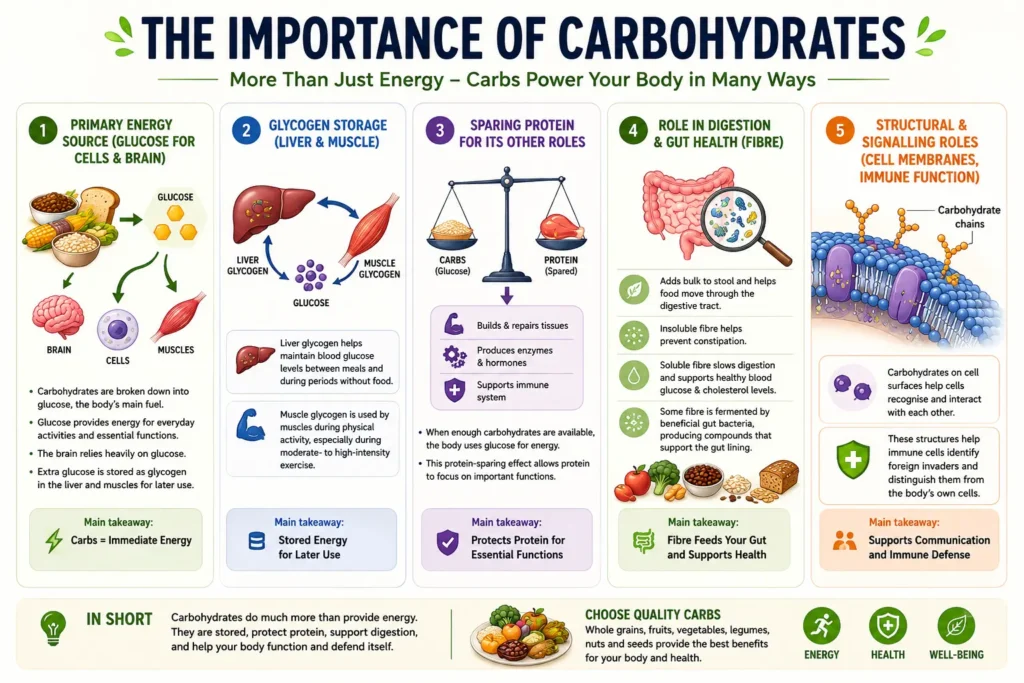
Primary Energy Source (Glucose for Cells & Brain)
Carbohydrates are the body’s main source of energy. During digestion, most carbohydrates are broken down into glucose, which enters the bloodstream and is taken up by cells to produce energy for everyday activities and essential body functions.
The brain relies heavily on glucose for energy, while muscles use it during both daily movement and physical activity. When immediate energy is not needed, some glucose can be stored as glycogen in the liver and muscles for later use.
Glycogen Storage (Liver & Muscle)
When you consume more carbohydrates than the body needs immediately, some of the resulting glucose is converted into glycogen and stored mainly in the liver and muscles. This provides a readily available source of glucose when energy is needed later.
Liver glycogen helps maintain blood glucose levels between meals and during periods without food. Muscle glycogen is mainly used by the muscles themselves during physical activity, particularly during moderate- to high-intensity exercise.
Sparing Protein for Its Other Roles
When enough carbohydrates are available, the body can use glucose as its main energy source instead of breaking down protein for fuel. This is known as the protein-sparing effect, allowing protein to focus on important roles such as building and repairing tissues, producing enzymes and hormones, and supporting the immune system.
Role in Digestion & Gut Health (Fibre)
Fibre supports healthy digestion by adding bulk to stool and helping food move through the digestive tract. Insoluble fibre can help prevent constipation, while soluble fibre can slow digestion and support healthy blood glucose and cholesterol levels.
Some types of fibre are also fermented by beneficial gut bacteria, producing compounds that support the health of the gut lining. Regularly eating fibre-rich foods such as fruits, vegetables, whole grains, legumes, nuts, and seeds can therefore support overall gut health.
Structural & Signalling Roles (Cell Membranes, Immune Function)
Beyond providing energy, certain carbohydrates help form structures on the surface of cells and play a role in cell-to-cell communication. Carbohydrate molecules attached to proteins and fats on cell membranes help cells recognise and interact with one another.
These carbohydrate structures also contribute to immune function by helping immune cells identify foreign substances and distinguish them from the body’s own cells.
How Carbohydrates Are Digested & Absorbed
Carbohydrate digestion begins in the mouth and continues through the digestive system, where complex carbohydrates are broken down into smaller sugars. These sugars are then absorbed into the bloodstream and transported to cells, where they can be used for energy or stored for later use.
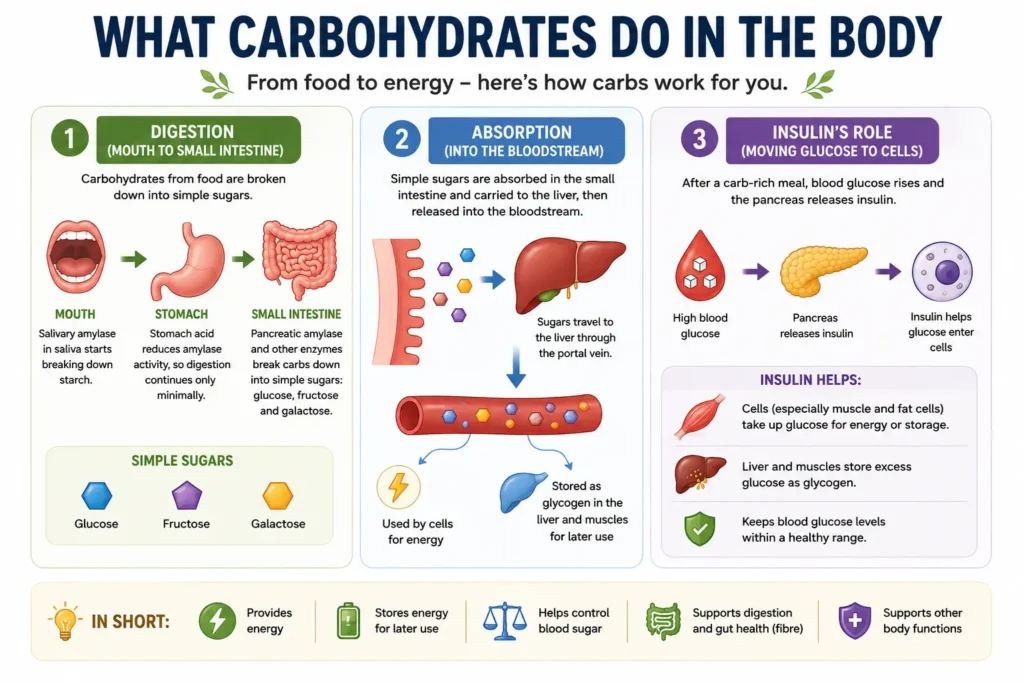
Digestion (Mouth to Small Intestine)
Carbohydrate digestion begins in the mouth, where an enzyme called amylase in saliva starts breaking down starch into smaller carbohydrate molecules. This process continues in the stomach only minimally because stomach acid reduces the activity of salivary amylase.
Most carbohydrate digestion takes place in the small intestine. Pancreatic amylase and other digestive enzymes break carbohydrates down into simple sugars, mainly glucose, fructose, and galactose, which can then be absorbed into the bloodstream.
Absorption Into the Bloodstream
Once carbohydrates are broken down into simple sugars, they are absorbed through the walls of the small intestine into the bloodstream. Glucose, galactose, and fructose are transported across intestinal cells and then carried to the liver through the portal vein.
The liver processes these sugars and helps regulate how much glucose enters the wider bloodstream. From there, glucose can be delivered to cells for energy or stored as glycogen for later use.
Insulin’s Role in Moving Glucose to Cells
After a carbohydrate-rich meal, blood glucose levels rise, prompting the pancreas to release insulin. Insulin acts like a signal that helps cells, particularly muscle and fat cells, take up glucose from the bloodstream to use for energy or storage.
Insulin also encourages the liver and muscles to store excess glucose as glycogen. This helps keep blood glucose levels within a healthy range and ensures glucose is available when the body needs it.
Simple vs Complex Carbohydrates — What’s the Real Difference?
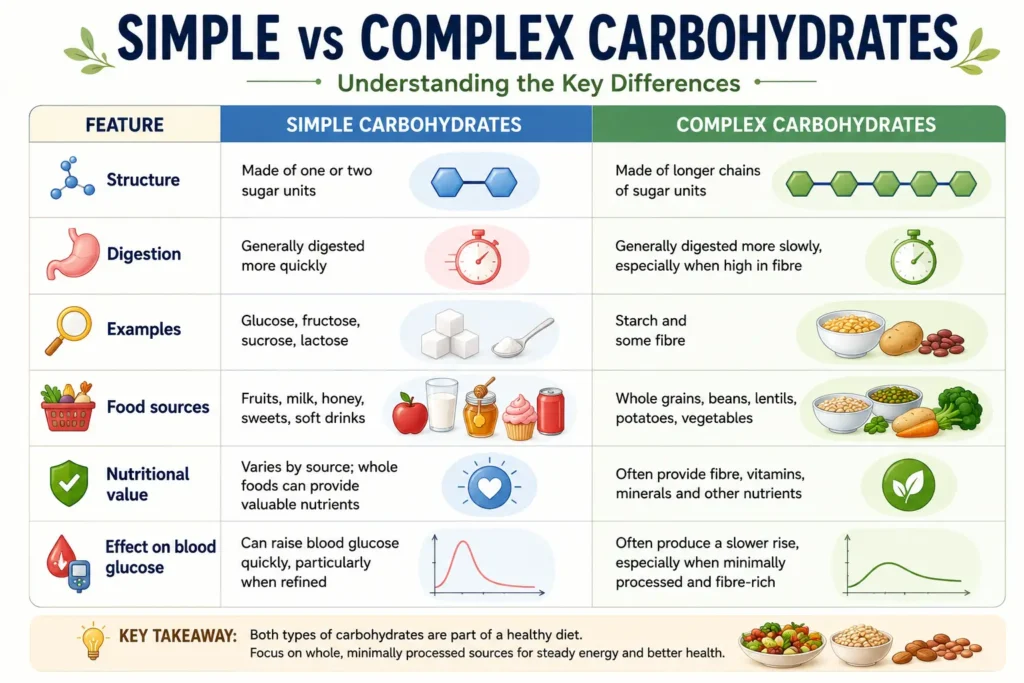
| Feature | Simple Carbohydrates | Complex Carbohydrates |
| Structure | Made of one or two sugar units | Made of longer chains of sugar units |
| Digestion | Generally digested more quickly | Generally digested more slowly, especially when high in fibre |
| Examples | Glucose, fructose, sucrose, lactose | Starch and some fibre |
| Food sources | Fruits, milk, honey, sweets, soft drinks | Whole grains, beans, lentils, potatoes, vegetables |
| Nutritional value | Varies by source; whole foods can provide valuable nutrients | Often provide fibre, vitamins, minerals and other nutrients |
| Effect on blood glucose | Can raise blood glucose quickly, particularly when refined | Often produce a slower rise, especially when minimally processed and fibre-rich |
Why “Fast” and “Slow” Carbs Isn’t Always Accurate
The terms “fast carbs” and “slow carbs” are often used to describe how quickly a food may raise blood glucose, but they can be misleading. The effect depends on factors such as the food’s fibre content, processing, cooking method, portion size, and the presence of protein or fat in the meal.
For example, a whole fruit contains simple sugars but also provides fibre, which can slow digestion and absorption. Similarly, some refined starches can raise blood glucose quickly. So, rather than simply labelling carbohydrates as “fast” or “slow”, it is more useful to consider the overall nutritional quality of the food.
Are Simple Carbs Always Bad?
No, simple carbohydrates are not always bad. Some occur naturally in nutritious foods such as fruits, vegetables, and milk, which also provide fibre, vitamins, minerals, and other beneficial nutrients.
The main concern is consuming too many added sugars from foods and drinks such as sweets, sugary beverages, and desserts. These can provide calories with little nutritional value, so they are best consumed in moderation as part of a balanced diet.
The Glycemic Index (GI) Explained
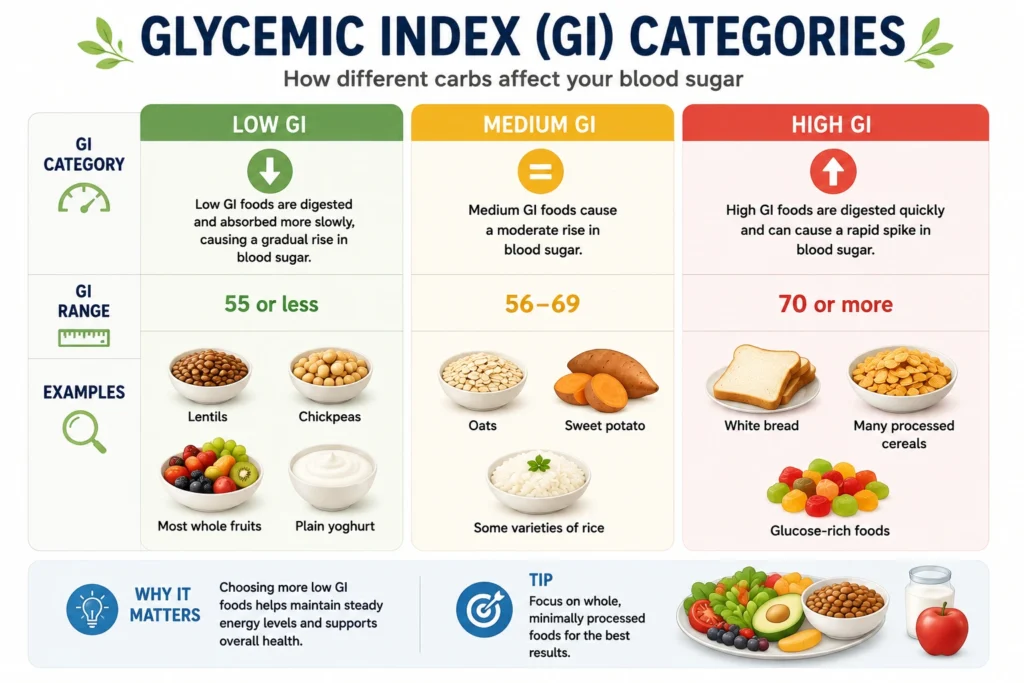
High-GI vs Low-GI Foods
The glycemic index (GI) ranks carbohydrate-containing foods based on how quickly they raise blood glucose levels. High-GI foods are digested and absorbed more quickly, causing a faster rise in blood glucose, while low-GI foods generally produce a slower and more gradual increase.
| GI Category | GI Range | Examples |
| Low GI | 55 or less | Lentils, chickpeas, most whole fruits, plain yoghurt |
| Medium GI | 56–69 | Oats, sweet potato, some varieties of rice |
| High GI | 70 or more | White bread, many processed cereals, glucose-rich foodscc |
How GI Affects Blood Sugar
The glycemic index (GI) helps indicate how quickly a carbohydrate-containing food can raise blood glucose after eating. High-GI foods tend to cause a faster rise, while low-GI foods generally lead to a slower and more gradual increase.
However, GI does not predict the blood glucose response on its own. Portion size, fiber, cooking method, food processing, and what you eat alongside the carbohydrate can all influence how much and how quickly blood glucose rises.
How Many Carbohydrates Do You Need Per Day?
Carb Needs by Activity Level & Life Stage
Carbohydrate needs can vary based on how active you are and which stage of life you are in.
| Life Stage / Activity Level | General Carbohydrate Needs |
| Less active adults | Moderate intake based on overall calorie needs |
| Active adults | Higher intake to support exercise and replenish glycogen |
| Athletes | Higher amounts may be needed, particularly around training and competition |
| Children & teenagers | Adequate carbohydrates to support growth, development, and activity |
| Pregnancy | At least 175 g/day is generally recommended |
| Breastfeeding | At least 210 g/day is generally recommended |
For most people, the quality of carbohydrate matters as much as the amount. Choose whole grains, fruits, vegetables, legumes, and other fibre-rich foods more often than refined and highly processed sources.
Carbs for Athletes vs Sedentary Individuals
Carbohydrate needs can differ significantly based on physical activity. Athletes use more carbohydrates for energy during training and competition, while sedentary individuals generally need less because their daily energy expenditure is lower.
| Group | Typical Carbohydrate Needs | Main Purpose |
| Sedentary / lightly active | Around 3–5 g/kg/day | Meet everyday energy needs |
| Moderately active | Around 5–7 g/kg/day | Support regular exercise and recovery |
| Endurance athletes | Around 6–10 g/kg/day | Fuel prolonged training and replenish glycogen |
| Very high training loads | Up to 8–12 g/kg/day | Support heavy or prolonged training |
These are general ranges rather than fixed targets. Individual needs depend on exercise intensity, duration, body size, training schedule, and overall calorie intake.
Signs You’re Not Eating Enough Carbs
Eating too few carbohydrates may leave you feeling low on energy, particularly if you are physically active. Common signs can include:
- Low energy and fatigue
- Difficulty concentrating or brain fog
- Headaches or dizziness
- Reduced exercise performance
- Poor workout recovery
- Increased irritability or mood changes
- Constipation, especially when fibre intake is also low
These symptoms can have many possible causes and do not necessarily mean you are deficient in carbohydrates. If they persist, it is worth reviewing your overall diet and speaking with a healthcare professional.
Are Low-Carb or No-Carb Diets Healthy?
A low-carb diet can work for some people, particularly when it focuses on vegetables, protein, healthy fats, and minimally processed foods. However, cutting carbohydrates too severely can make it harder to get enough fibre, vitamins, minerals, and energy, especially for people who exercise regularly.
A no-carb diet is much more restrictive and eliminates many nutritious foods, including fruits, whole grains, legumes, and some vegetables. For most people, completely avoiding carbohydrates is unnecessary; a balanced diet with the right amount and quality of carbohydrates is generally a more sustainable approach.
Best Sources of Carbohydrates
Whole Grains & Starchy Foods
Whole grains and starchy foods are some of the most common sources of carbohydrates. Good options include:
- Whole grains: Oats, brown rice, whole-wheat roti, barley, quinoa and millets
- Starchy vegetables: Potatoes, sweet potatoes, corn and peas
- Grain-based foods: Whole-grain bread, chapati, pasta and cereals
- Traditional Indian options: Ragi, jowar, bajra and other millets
Fruits & Vegetables
Fruits and vegetables provide carbohydrates along with fibre, vitamins, minerals, and antioxidants. Good carbohydrate-rich choices include:
- Fruits: Bananas, apples, mangoes, oranges, grapes, berries and dates
- Starchy vegetables: Potatoes, sweet potatoes, corn, peas and pumpkin
- Other vegetables: Carrots, beetroot, onions and green peas
- Indian options: Raw banana, sweet potato, yam and colocasia (arbi)
Whole fruits and minimally processed vegetables are generally better choices than juices or heavily processed products because they retain more fibre and nutrients.
Legumes & Beans
Legumes and beans are nutritious sources of carbohydrates, while also providing plant-based protein and fibre. Common options include:
- Beans: Kidney beans (rajma), black beans, navy beans and black-eyed peas
- Lentils: Masoor dal, moong dal, toor dal and urad dal
- Chickpeas: Kabuli chana and kala chana
- Soy: Soybeans and edamame
- Other legumes: Peas and pigeon peas
Including legumes in meals can provide carbohydrates along with fibre, protein, vitamins and minerals, making them a nutrient-dense choice.
Dairy
Dairy foods can provide carbohydrates mainly in the form of lactose, the natural sugar found in milk. Good sources include:
- Milk: Cow’s milk and other dairy milk
- Yoghurt: Plain and flavoured yoghurt
- Curd: Plain curd or dahi
- Buttermilk: Chaas and other fermented dairy drinks
- Other dairy foods: Kefir and milk-based products
Dairy also provides protein, calcium, and other essential nutrients, although the carbohydrate content varies between products. Plain dairy options are generally preferable to products with large amounts of added sugar.
Added Sugars to Limit
Added sugars are sugars added to foods or drinks during processing or preparation. They are common in sweets, soft drinks, packaged desserts, biscuits, flavoured drinks, and many processed foods.
Common sources include:
- Soft drinks and sweetened beverages
- Sweets, chocolates and desserts
- Biscuits, cakes and pastries
- Sweetened cereals and flavoured yoghurt
- Table sugar, syrups and sweet spreads
Added sugars provide energy but generally offer few essential nutrients. They are best consumed in moderation, while naturally occurring sugars in whole fruits and milk do not need to be avoided.
Health Benefits & Risks of Carbohydrates
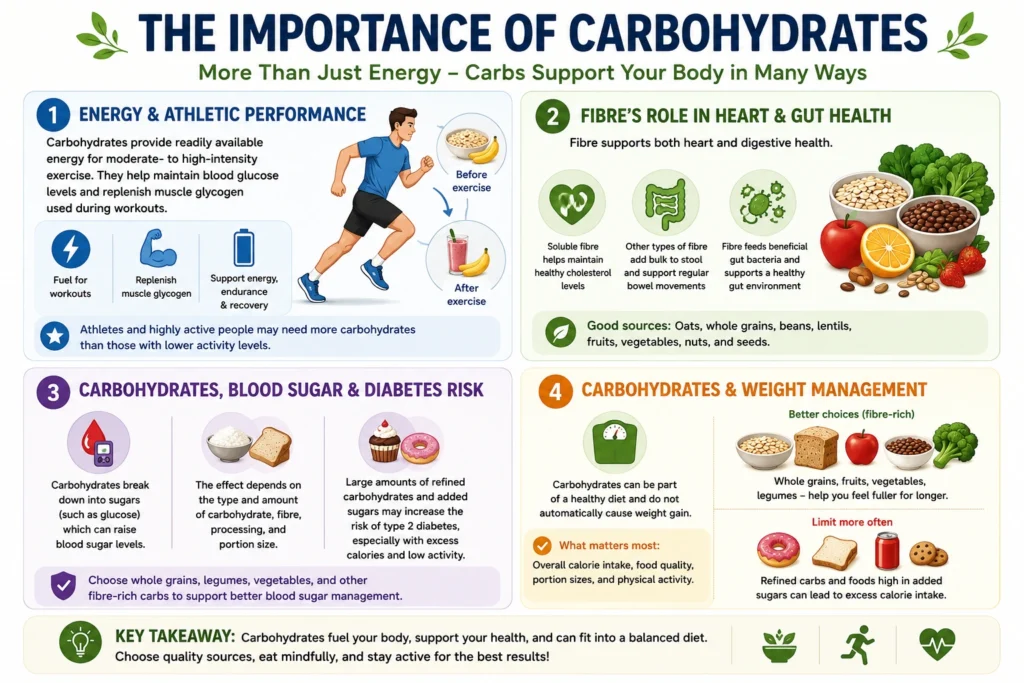
Energy & Athletic Performance
Carbohydrates provide readily available energy for physical activity, making them especially important during moderate- to high-intensity exercise. They help maintain blood glucose levels and replenish muscle glycogen used during workouts.
Eating enough carbohydrates before and after exercise can support energy, endurance, and recovery. Athletes and highly active people may need more carbohydrates than those with lower activity levels.
Fibre’s Role in Heart & Gut Health
Fibre supports both heart and digestive health. Soluble fibre can help maintain healthy cholesterol levels, while other types of fibre add bulk to stool and support regular bowel movements.
Fibre also feeds beneficial gut bacteria, which can support a healthy gut environment. Good sources include oats, whole grains, beans, lentils, fruits, vegetables, nuts, and seeds.
Carbohydrates, Blood Sugar & Diabetes Risk
Carbohydrates are broken down into sugars such as glucose, which can raise blood sugar levels after eating. The effect depends on the type and amount of carbohydrate, as well as factors such as fibre, processing, and portion size.
Regularly consuming large amounts of refined carbohydrates and added sugars may contribute to poor blood sugar control and a higher risk of type 2 diabetes, particularly when combined with excess calorie intake and low physical activity. Choosing whole grains, legumes, vegetables, and other fibre-rich carbohydrate sources can support better blood sugar management.
Carbohydrates & Weight Management
Carbohydrates can be part of a healthy diet and do not automatically cause weight gain. What matters most is overall calorie intake, food quality, portion sizes, and physical activity.
Choosing fibre-rich carbohydrate sources such as whole grains, fruits, vegetables, and legumes can help you feel fuller for longer. In contrast, frequently consuming refined carbohydrates and foods high in added sugars can make it easier to consume excess calories.
Common Carbohydrate Myths
Carbohydrates are often blamed for weight gain, diabetes, and low energy, but the reality is more nuanced. The type, quantity, and quality of carbohydrates matter more than simply avoiding them. Here are some common myths explained:
| Myth | The Reality |
| All carbohydrates are bad for you. | Not all carbs are the same. Fruits, vegetables, whole grains, and legumes provide carbohydrates along with fibre, vitamins, and minerals. |
| Carbohydrates make you gain weight. | Carbohydrates themselves do not automatically cause weight gain. Consuming more calories than your body needs over time is the main driver of weight gain. |
| You should avoid carbs to lose weight. | Reducing refined carbohydrates may help some people reduce calorie intake, but you do not need to eliminate carbohydrates completely to manage weight. |
| Simple carbohydrates are always unhealthy. | Some simple carbohydrates occur naturally in nutritious foods. Fruits contain simple sugars along with fibre, vitamins, minerals, and antioxidants. |
| Complex carbohydrates are always healthy. | “Complex” does not automatically mean healthy. Highly processed foods can contain complex starches but may still be high in calories, sodium, or added sugars. |
| Eating carbs at night causes weight gain. | The timing of carbohydrate intake is generally less important than your overall calorie intake and food choices throughout the day. |
| People with diabetes should never eat carbohydrates. | People with diabetes can include carbohydrates in their diet. Managing portions, choosing high-fibre sources, and considering the overall meal can help with blood glucose control. |
| Fruit should be avoided because it contains sugar. | Whole fruit contains naturally occurring sugar but also provides fibre, water, vitamins, minerals, and other beneficial plant compounds. |
| A low-carb diet is healthier for everyone. | Low-carb diets may suit some people, but carbohydrate needs vary. A balanced diet can include appropriate amounts of nutrient-rich carbohydrates. |
| Carbs only provide energy. | Carbohydrates also provide fibre, support gut health, help fuel exercise, and contribute to several important biological processes. |
The key takeaway: Instead of asking whether carbohydrates are “good” or “bad”, look at where they come from. Whole grains, fruits, vegetables, legumes, and other minimally processed sources are generally more nutritious choices than foods dominated by refined carbohydrates and added sugars.
The Bottom Line
Carbohydrates are an essential source of energy and play important roles in brain function, physical activity, digestion, and overall health. They are not inherently unhealthy; what matters is the type, portion, and quality of the carbohydrate you choose.
For a balanced diet, prioritise whole grains, fruits, vegetables, legumes, and other fibre-rich foods while limiting refined carbohydrates and added sugars. Understanding how different carbohydrates affect your body can help you make better choices based on your energy needs, activity level, and health goals.
FAQs About Carbohydrates
What are carbohydrates in simple terms?
Carbohydrates are nutrients found in foods such as grains, fruits, vegetables, and legumes that provide the body with energy.
What are the 3 types of carbohydrates?
The three main types of carbohydrates are sugars, starches, and fibre, each differing in structure, digestion, and role in the body.
Are carbohydrates bad for you?
No, carbohydrates are not inherently bad; choosing nutrient-rich sources such as whole grains, fruits, vegetables, and legumes is key, while refined carbs and added sugars are best limited.
Do carbs make you fat / gain weight?
No, carbohydrates do not automatically cause weight gain; eating more calories than your body needs over time is the main cause of weight gain, regardless of the nutrient source.
What foods have no carbs?
Foods that contain little to no carbohydrates include meat, poultry, fish, eggs, and most cooking oils, while some dairy products and plant foods contain small amounts.
Is fiber a carbohydrate?
Yes. Fibre is a type of carbohydrate that the body cannot fully digest, and it supports healthy digestion, gut health, and blood sugar regulation.
What is the difference between simple and complex carbohydrates?
Simple carbohydrates contain one or two sugar units, while complex carbohydrates contain longer chains of sugar units and are often found in fibre- and nutrient-rich foods.
How many carbs should I eat a day?
Most adults should get about 45–65% of their daily calories from carbohydrates, with individual needs varying based on age, activity level, and health goals.
What happens if you don’t eat enough carbs?
Not eating enough carbohydrates may cause low energy, fatigue, headaches, difficulty concentrating, and reduced exercise performance, especially in physically active people; very low intake can also reduce fibre intake and cause constipation.
Are carbs necessary / do you need carbs to live?
Carbohydrates are not strictly essential for survival because the body can make glucose from other nutrients, but they are an important source of energy and provide valuable fibre and nutrients.
What is the glycemic index?
The glycemic index (GI) is a scale that ranks carbohydrate-containing foods based on how quickly they raise blood glucose levels after eating.
Which carbs are healthy vs. unhealthy (“good carbs vs. bad carbs”)?
Healthy carbohydrates generally include whole grains, fruits, vegetables, legumes, and other fibre-rich foods, while less healthy choices are usually refined carbohydrates and foods high in added sugars.
Is sugar a carbohydrate?
Yes, sugar is a type of carbohydrate, specifically a simple carbohydrate made up of one or two sugar molecules.
How do carbohydrates turn into energy in the body?
Carbohydrates are broken down into glucose during digestion, which enters the bloodstream and is used by cells to produce energy for the brain, muscles, and other body functions.
What are carbohydrates made of? (chemically)
Carbohydrates are made mainly of carbon, hydrogen, and oxygen atoms, which combine in different arrangements to form sugars, starches, and fibre.
Can you eat too many carbs?
Yes, eating too many carbohydrates can contribute to excess calorie intake and weight gain, particularly when they come from refined foods and added sugars; individual carbohydrate needs vary by activity level and overall diet.
Are fruits high in carbs?
Yes, fruits contain carbohydrates, mainly from naturally occurring sugars, but they also provide fibre, vitamins, minerals, and other beneficial nutrients.
What’s the difference between carbs and sugar?
Carbohydrates are a broad group of nutrients that include sugars, starches, and fibre, while sugar is a type of simple carbohydrate made of one or two sugar molecules.

What Is Fat? Definition, Types, Function & How Much You Need
For years, fat has been labelled as something to avoid, but dietary fat is actually an essential nutrient that supports…
Read more about What Is Fat? Definition, Types, Function & How Much You Need