

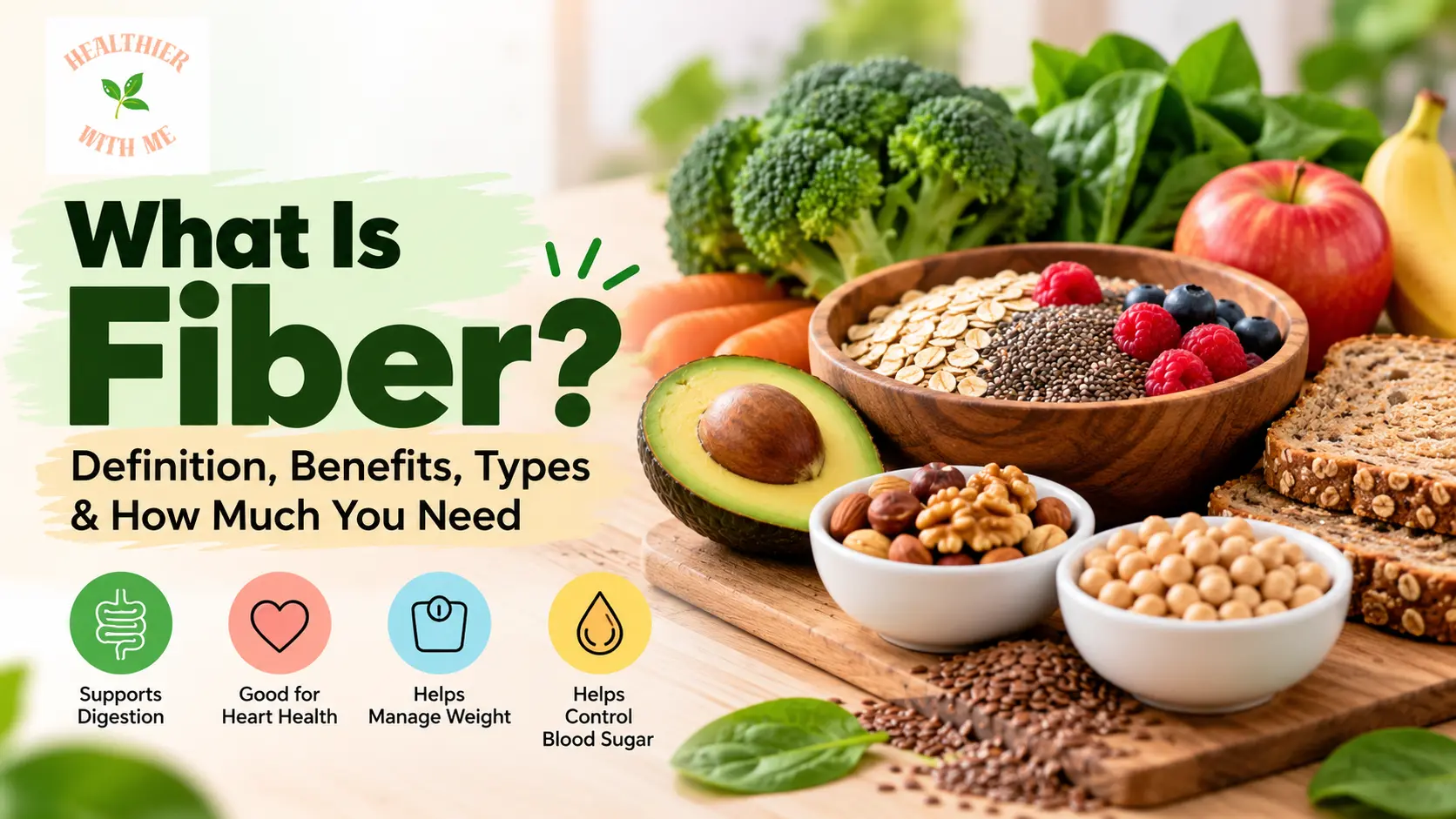
Fiber is often treated like the “boring” part of food—something you only think about when digestion isn’t going well. But fiber is actually doing a lot more behind the scenes. It helps keep your gut moving, feeds beneficial gut bacteria, supports healthy blood sugar and cholesterol levels, and can even help you feel full for longer. The catch? Many of us simply aren’t getting enough. In India, studies suggest that average fiber intake is often around 15–20 g per day, while adults generally need around 25–30 g daily—meaning there can be a noticeable gap between what we need and what we actually eat.
And getting more fiber doesn’t mean surviving on bowls of tasteless salad! Dal, chickpeas, fruits, vegetables, whole grains, nuts and seeds can all contribute to your daily intake. So, what exactly is fiber, how is it different from other carbohydrates, how much do you really need, and what happens when you don’t get enough? Let’s break it down in a simple, practical way so you can understand fiber and make it a natural part of your everyday diet.
In this guide, we’ll break down what fiber is, the different types, how it moves through your digestive system, its benefits for gut and overall health, how much you need, the best food sources, and simple ways to increase your intake without uncomfortable bloating. We’ll also cover when a high-fiber diet may not be suitable and clear up some of the most common fiber myths.
What Is Fiber? (Quick Definition)
Fiber is a type of carbohydrate that the human body cannot fully digest. Unlike sugars and starches, which are broken down and absorbed to provide energy, fiber passes through much of the digestive system without being broken down in the small intestine.
That doesn’t mean fiber is useless. Quite the opposite. As it moves through the digestive tract, fiber can add bulk to stool, slow the absorption of nutrients, support healthy blood sugar and cholesterol levels, and provide food for beneficial gut bacteria. Good sources include fruits, vegetables, whole grains, beans, lentils, nuts and seeds.
Fiber vs Other Carbohydrates — Why the Body Can’t Digest It
Most carbohydrates are broken down into smaller sugars during digestion. These sugars can then be absorbed into the bloodstream and used by the body for energy.
Fiber is different because of the way its chemical structure is arranged. Human digestive enzymes cannot break down many of the bonds found in dietary fiber. As a result, fiber is not fully digested in the small intestine.
Instead, different types of fiber behave differently as they travel through the gut:
- Some fiber holds water and forms a gel-like substance, which can slow digestion.
- Some fiber adds bulk to stool, helping food waste move through the digestive tract.
- Some fiber is fermented by gut bacteria in the large intestine, producing useful compounds that support gut health.
So, while your body cannot digest fiber in the same way it digests other carbohydrates, fiber still has important effects throughout the digestive system.
Fiber as Part of the Carbohydrate Family
Fiber belongs to the carbohydrate family, but it behaves differently from digestible carbohydrates such as sugars and starches.
A simple way to think about it is:
Carbohydrates → Sugars + Starches + Fiber
- Sugars: Usually digested quickly and provide a readily available source of energy.
- Starches: Made of long chains of glucose and broken down into smaller sugars during digestion.
- Fiber: Not fully digested by human digestive enzymes and instead passes through the digestive tract, where it can provide several health benefits.
This is why fiber is often included in the total carbohydrate value on a nutrition label, even though it does not provide energy in exactly the same way as digestible carbohydrates. In short, fiber is a carbohydrate—but it is a special kind that works more like a helper for your digestive and metabolic health than a conventional source of energy.
Types of Fiber
Fiber is not a single substance that behaves the same way in the body. Different fibres have different structures and interact with water, digestion and gut bacteria in different ways. The most common way to classify dietary fibre is as soluble or insoluble, although fermentability is another useful way to understand how fibre behaves in the colon.
Soluble Fiber
Soluble fibre dissolves in water and can form a soft, gel-like material in the digestive tract. This can slow the movement of food through the stomach and intestine and influence how quickly glucose and other nutrients are absorbed.
Some soluble fibres are also fermented by gut bacteria, making them useful for supporting the gut microbiome.
Common sources include:
- Oats and barley
- Beans and lentils
- Apples and citrus fruits
- Chia seeds
- Flaxseeds
- Psyllium
Insoluble Fiber
Insoluble fibre does not dissolve readily in water. Instead, it helps increase the bulk of intestinal contents and can support regular bowel movements by helping waste move through the digestive tract.
It is particularly common in the outer layers of plants and whole grains.
Common sources include:
- Whole-wheat flour and bran
- Brown rice
- Vegetables such as carrots and green beans
- Potato skins
- Nuts and seeds
- Many fruits and vegetables
Fermentable vs Non-Fermentable Fiber
Another way to classify fibre is by asking whether gut bacteria can ferment it in the large intestine.
| Type | What happens | Examples |
| Fermentable fibre | Gut bacteria break down some of the fibre and produce compounds such as short-chain fatty acids. | Inulin, resistant starch, some soluble fibres |
| Non-fermentable fibre | Resists bacterial breakdown and remains relatively intact as it passes through the colon. | Some forms of cellulose and other insoluble fibres |
Important: Soluble and insoluble fibre are not completely separate categories. Some fibres can have characteristics of both, and their behaviour can change depending on their structure and how the food is prepared. This is why focusing on a variety of fibre-rich foods is generally more useful than trying to choose only one type.
How Fiber Moves Through the Body
Fiber takes a different journey through the digestive system than sugars and starches. Because much of it resists digestion, it can reach the large intestine, where it either interacts with water, contributes to stool bulk, or is used by gut bacteria.
Why Fiber Isn’t Broken Down Like Other Carbs
The human digestive system produces enzymes that can break down many sugars and starches into smaller molecules. Most dietary fibre has a structure that these enzymes cannot break apart, so it passes through the small intestine largely intact.
This is also why fibre does not cause the same rapid rise in blood glucose as digestible carbohydrates. Instead, its physical and chemical properties influence how quickly food moves through the digestive tract and how nutrients are absorbed.
Fiber’s Role in Digestion (Mouth to Colon)
Fiber interacts with different parts of the digestive system as it travels from the mouth to the colon:
| Part of the digestive system | What happens to fibre |
| Mouth | Chewing breaks fibre-rich foods into smaller pieces, making them easier to swallow and digest. |
| Stomach | Fibre can absorb water and increase the volume of food, which may contribute to feelings of fullness. |
| Small intestine | Most fibre is not broken down by human digestive enzymes, so it continues through the digestive tract. |
| Large intestine (colon) | Certain fibres are fermented by gut bacteria, while other types help add bulk to intestinal contents. |
| End of the digestive tract | Fibre that remains undigested contributes to stool and is eventually eliminated from the body. |
The result is that fibre can influence digestion, bowel movements and the gut environment without being digested like ordinary carbohydrates.
What Does Fiber Do in the Body? (Functions & Benefits)
Dietary fibre supports several important processes in the body. Its benefits include better bowel regularity, a healthier gut microbiome, improved cholesterol and blood sugar management, greater fullness, and a lower risk of some chronic diseases.
Supports Regular Bowel Movements
Fibre helps keep bowel movements regular by increasing stool bulk and retaining water. This can make stools easier to pass and support healthy bowel function.
- Insoluble fibre adds bulk to stool and helps food waste move through the digestive tract.
- Some soluble fibre absorbs water and can help improve stool consistency.
- Drinking enough fluids alongside a fibre-rich diet is important.
Good sources: Whole grains, vegetables, fruits, beans and lentils.
Feeds the Gut Microbiome (Prebiotic Effect)
Some types of fibre act as prebiotics, providing fuel for beneficial bacteria in the large intestine. These bacteria ferment certain fibres and produce compounds that help maintain a healthy gut environment.
Good sources: Onions, garlic, legumes, oats, barley, bananas, fruits and vegetables.
Helps Lower Cholesterol
Certain types of soluble fibre can help lower LDL (Low-Density Lipoprotein) cholesterol. It can bind with bile acids in the digestive tract, encouraging the body to use more cholesterol to produce new bile acids.
Good sources: Oats, barley, beans, lentils, apples and psyllium.
Helps Regulate Blood Sugar
Fibre can slow the digestion and absorption of carbohydrates, particularly when meals contain soluble and viscous fibre. This can help reduce rapid increases in blood glucose after eating.
Choosing fibre-rich foods such as whole grains, legumes, vegetables and whole fruits can therefore support better blood sugar management.
Supports Healthy Weight & Satiety
Fibre can help you feel fuller for longer. High-fibre foods often add volume to meals and may slow digestion, helping control hunger and making it easier to manage overall food intake.
Instead of relying on highly processed foods, include fibre-rich whole foods such as vegetables, fruits, beans, lentils, oats and whole grains.
Reduces Risk of Heart Disease & Certain Cancers
Regularly eating enough fibre as part of a healthy diet is associated with a lower risk of heart disease and colorectal cancer. These benefits may come from several effects of fibre, including healthier cholesterol levels, improved bowel function, better blood sugar control and support for a healthy body weight.
The World Health Organization (WHO) reviewed systematic reviews of randomised controlled trials and prospective observational studies and concluded that higher dietary fibre intake is associated with a reduced risk of cardiovascular disease, type 2 diabetes and cancer. The evidence was rated moderate certainty.
However, fibre is one part of an overall healthy lifestyle. Physical activity, body weight, smoking, alcohol intake, genetics and the overall quality of the diet also influence the risk of chronic disease.
Fiber and the Gut Microbiome
Your digestive system is home to trillions of microorganisms, including bacteria that interact with the food you eat. Fibre plays an important role in this relationship because some types of fibre reach the large intestine and become a food source for gut bacteria.
How Fiber Feeds “Good” Bacteria
Some dietary fibres cannot be digested by human enzymes, so they travel to the large intestine, where certain gut bacteria can use them as a source of fuel. These fibres are often described as prebiotic fibres because they help support the growth and activity of beneficial microorganisms.
Regularly eating a variety of plant foods can provide different types of fibre to the gut microbiome. Good choices include onions, garlic, bananas, oats, barley, beans, lentils, fruits, vegetables, nuts and seeds.
Short-Chain Fatty Acids & Gut Health
When gut bacteria ferment certain fibres, they produce short-chain fatty acids (SCFAs), including acetate, propionate and butyrate. These compounds are an important connection between the food you eat and the activity of your gut microbiome.
Butyrate, in particular, serves as an energy source for cells lining the colon and is involved in maintaining the gut barrier. SCFAs can also influence immune function and other processes throughout the body.
This is one reason why eating a variety of fibre-rich plant foods is more useful than relying on a single source of fibre.
What Happens When You Don’t Eat Enough Fiber?
A diet consistently low in fibre can affect both bowel health and the gut microbiome. You may experience:
- Constipation or less regular bowel movements
- Lower intake of prebiotic fibres that support beneficial gut bacteria
- Reduced production of short-chain fatty acids from fibre fermentation
- Less variety in the types of plant foods reaching the gut
A low-fibre diet does not mean your gut microbiome is automatically unhealthy, but regularly eating a diverse range of fibre-rich foods helps provide the substrates that beneficial gut bacteria need.
Simple takeaway: Think of fibre as food for your gut microbes. The more variety of plant foods you include, the greater the variety of fibres available to your gut microbiome.
How Much Fiber Do You Need Per Day?
Your daily fibre requirement depends mainly on age and sex, with needs generally increasing as calorie requirements increase. Rather than aiming for one number that works for everyone, use your age group and individual needs as a guide.
Recommended Daily Intake by Age & Gender
| Age Group | Recommended Fibre Intake |
| 1–3 years | 19 g/day |
| 4–8 years | 25 g/day |
| 9–13 years — Boys | 31 g/day |
| 9–13 years — Girls | 26 g/day |
| 14–18 years — Boys | 38 g/day |
| 14–18 years — Girls | 26 g/day |
| 19–50 years — Men | 38 g/day |
| 19–50 years — Women | 25 g/day |
| 51+ years — Men | 30 g/day |
| 51+ years — Women | 21 g/day |
For adults, the WHO recommends at least 25 g of naturally occurring dietary fibre per day as part of a healthy diet. Individual requirements can vary, so these figures should be viewed as practical targets rather than strict limits.
Why Most People Don’t Get Enough Fiber
Getting enough fibre sounds easy until you look at what actually ends up on the plate. Diets that contain plenty of refined grains, packaged foods and added sugars, but fewer whole plant foods, can leave little room for fibre-rich choices.
Common reasons include:
- Choosing white rice, white bread and refined flour more often than whole-grain alternatives
- Eating too few fruits and vegetables
- Having smaller portions of dal, beans, chickpeas and lentils
- Removing edible skins from fruits and vegetables unnecessarily
- Relying heavily on ultra-processed or packaged foods
- Not eating enough nuts and seeds
A simple way to increase your intake is to build meals around whole grains, pulses, vegetables and whole fruits rather than trying to get all your fibre from one particular food.
Best Sources of Fiber
The easiest way to get enough fibre is to eat a variety of plant foods rather than relying on one “high-fibre” food. Fruits, vegetables, whole grains, legumes, nuts and seeds all provide different types of fibre along with vitamins, minerals and other beneficial plant compounds.
Fruits & Vegetables
Fruits and vegetables are simple ways to add fibre to everyday meals. Eating whole fruits is generally better for fibre than drinking fruit juice, because juicing removes much of the fibre.
| Food | Easy ways to include it |
| Guava | Eat whole as a snack |
| Apple or pear | Keep the edible skin on when appropriate |
| Orange | Eat as a whole fruit instead of juice |
| Carrots | Add to salads, sabzi or snacks |
| Green peas | Add to pulao, curries or mixed vegetables |
| Broccoli | Steam, roast or add to stir-fries |
| Leafy vegetables | Use in sabzi, dal or wraps |
Whole Grains
Whole grains contain more of the grain’s natural structure than refined grains, making them useful sources of dietary fibre. Try replacing some refined grain products with whole-grain options.
Good choices include:
- Oats
- Whole-wheat atta
- Brown rice
- Barley
- Millets such as ragi, bajra and jowar
- Whole-grain breads and cereals
Legumes & Beans
Legumes are some of the most practical high-fibre foods, particularly in Indian diets. They can provide fibre along with plant protein and other nutrients.
Examples include:
- Dal
- Chickpeas (chana)
- Kidney beans (rajma)
- Black-eyed peas (lobia)
- Green peas
- Lentils
- Other beans and pulses
Adding dal, chana or rajma to regular meals can increase fibre without requiring major changes to the way you eat.
Nuts & Seeds
Nuts and seeds provide fibre along with healthy fats, protein and other nutrients. Because they are energy-dense, small portions are usually enough.
Useful choices include:
- Almonds
- Peanuts
- Walnuts
- Chia seeds
- Flaxseeds
- Pumpkin seeds
- Sunflower seeds
- Sesame seeds
You can add seeds to oats, yoghurt, smoothies or salads, or simply have a small handful of nuts as a snack.
Whole Foods vs Fiber Supplements
For most people, whole foods should be the first choice for meeting daily fibre needs. Fibre-rich foods provide more than fibre alone—they also contribute vitamins, minerals and other plant compounds.
| Whole Foods | Fibre Supplements |
| Provide fibre plus other nutrients | Mainly provide a concentrated source of fibre |
| Offer a variety of fibre types | Usually contain a specific type of fibre |
| Can be included naturally in meals | Useful when dietary intake is difficult to increase |
| Examples: fruits, vegetables, whole grains, pulses, nuts and seeds | Examples: psyllium and other isolated fibre products |
Fibre supplements can be useful in certain situations, but they shouldn’t automatically replace a fibre-rich diet. If you increase fibre through food or supplements, do so gradually and drink enough water to reduce the chance of bloating or digestive discomfort.
How to Add More Fiber to Your Diet (Without Bloating)
If your current diet is low in fibre, suddenly adding large amounts can leave you feeling bloated, gassy or uncomfortable. The better approach is to make small changes, give your digestive system time to adjust, and spread your fibre intake throughout the day.
Simple Swaps for Everyday Meals
You don’t need to completely change your diet to eat more fibre. A few everyday swaps can make a noticeable difference.
| Instead of | Try |
| White bread | Whole-wheat or whole-grain bread |
| White rice | Brown rice or a whole grain such as barley |
| Refined-flour roti | Roti made with whole-wheat atta |
| Fruit juice | Whole fruit |
| Sugary breakfast cereal | Oats or another whole-grain cereal |
| Biscuits or chips | A small portion of nuts, seeds or fresh fruit |
| Plain refined snacks | Roasted chana or other legumes |
You can also add dal, beans, vegetables, fruits, nuts and seeds to meals you already enjoy. This makes increasing fibre feel less like a diet change and more like a small upgrade to your usual food.
Why You Should Increase Fiber Gradually
Your gut bacteria need time to adapt when you suddenly increase the amount of fibre you eat. A large increase overnight can lead to gas, bloating and abdominal discomfort, especially if your usual diet contains very little fibre.
Start with small changes and gradually increase your intake over several days or weeks. For example, you could add one serving of fruit or vegetables first, then gradually increase whole grains, pulses, nuts and seeds.
The goal is consistency, not a sudden fibre overload. A variety of fibre-rich foods eaten regularly is generally easier for your digestive system to handle.
Drinking Enough Water With Fiber
Fibre and fluids work together. Some types of fibre absorb water and swell, helping create softer, bulkier stool. If you significantly increase fibre without drinking enough fluids, you may experience constipation or digestive discomfort.
Make water a regular part of your day, particularly when increasing your fibre intake. There is no single amount of water that suits everyone, as fluid needs vary with body size, climate, physical activity and diet.
Simple rule: Increase fibre gradually, choose a variety of whole foods, and keep your fluid intake adequate. This gives your digestive system time to adjust while helping you build a sustainable high-fibre eating pattern.
Who Should Be Careful With High-Fiber Diets?
For most people, eating more fibre is a healthy choice. However, there are certain situations where a sudden increase in fibre—or a temporarily low-fibre diet—may be recommended. This is usually related to a medical condition, surgery, or a procedure rather than fibre being unhealthy itself.
Before Certain Surgeries or Procedures
Some surgeries and medical procedures may require you to temporarily reduce high-fibre foods. The reason is that certain fibre-rich foods can leave more undigested material in the digestive tract or may be harder to digest.
If your doctor or healthcare team gives you a low-fibre or low-residue diet before a procedure, follow their specific instructions rather than changing your diet on your own.
During IBD Flare-Ups or Digestive Conditions
People with digestive conditions such as Crohn’s disease or ulcerative colitis may sometimes need to modify their fibre intake during an active flare-up, particularly if they are experiencing symptoms such as abdominal pain, diarrhoea, or a narrowing of the intestine.
A high-fibre diet is not automatically unsuitable for everyone with IBD. The appropriate amount and type of fibre can depend on the condition, symptoms, and whether complications such as a bowel stricture are present.
If you have an ongoing digestive condition, speak with your doctor or dietitian before making a major change to your fibre intake.
Before a Colonoscopy
Before a colonoscopy, you are usually asked to follow specific dietary instructions to help clear the bowel so the doctor can get a clear view of the colon. This commonly involves avoiding high-fibre foods for a period before the procedure, followed by a prescribed clear-liquid diet closer to the examination.
The exact timing and food restrictions can vary depending on the preparation your healthcare provider uses, so follow the instructions given by your colonoscopy team rather than relying on general dietary advice.
Simple takeaway: Fibre is beneficial for most people, but there are times when the amount or type of fibre needs to be adjusted temporarily. If you are preparing for a procedure or managing a digestive condition, follow your healthcare professional’s guidance.
Common Fiber Myths
| Fiber Myth | The Fact |
| Fiber is only important for digestion. | Fiber does more than support regular bowel movements. It can also support healthy cholesterol and blood sugar levels, fullness, and gut bacteria. |
| All fiber works the same way. | Different types of fiber have different effects. Soluble, insoluble, fermentable, and non-fermentable fiber can behave differently in the digestive system. |
| More fiber is always better. | Not necessarily. Increasing fiber too quickly can cause gas, bloating, and abdominal discomfort. It is better to increase intake gradually. |
| Fiber supplements are better than food. | Supplements can be useful in some situations, but whole foods are generally the best starting point because they provide fiber along with other nutrients. |
| You need to avoid carbohydrates to get more fiber. | Many fibre-rich foods are carbohydrates, including whole grains, fruits, vegetables, pulses, and legumes. They can all be part of a balanced diet. |
| Fruit juice provides the same fiber as whole fruit. | Whole fruit generally provides more fiber because much of the fiber is removed during juicing. Choose whole fruit more often when increasing fiber. |
| Fiber causes bloating, so it should be avoided. | A sudden increase in fiber can cause temporary bloating. Gradually increasing fiber and drinking enough fluids can make the transition easier. |
| Fiber is only found in fruits and vegetables. | Fiber is also found in dal, beans, chickpeas, whole grains, millets, nuts, and seeds, making it easy to include in everyday meals. |
The Bottom Line
Fiber may not be the most exciting part of your diet, but it plays an important role in digestion, gut health, blood sugar, cholesterol, and healthy weight management. The good news is that getting more fiber doesn’t require a complicated diet.
Focus on adding more whole, plant-based foods to your everyday meals—dal, beans, vegetables, fruits, whole grains, millets, nuts, and seeds. If your current intake is low, increase it gradually and drink enough fluids to help your body adjust.
You don’t need to aim for perfection with every meal. A little more fiber, consistently, can make a meaningful difference to your overall diet and long-term health.
FAQs About Fiber
What is dietary fiber?
Dietary fiber is a type of carbohydrate found mainly in plant foods that the body cannot fully digest.
What are the two types of fiber (soluble vs insoluble)?
Soluble fiber dissolves in water and can form a gel, while insoluble fiber adds bulk to stool and supports regular bowel movements.
Why is fiber important / good for you?
Fiber supports healthy digestion, regular bowel movements, gut bacteria, fullness, and healthy blood sugar and cholesterol levels.
How much fiber should I eat per day?
Adults should consume at least 25 g of naturally occurring dietary fiber per day, although individual needs can vary based on age, sex, and overall diet.
What foods are high in fiber?
High-fiber foods include dal, beans, chickpeas, whole grains, millets, fruits, vegetables, nuts, and seeds.
Does fiber help you lose weight?
Fiber can support weight management by increasing fullness, adding volume to meals, and helping you feel satisfied for longer.
Can you eat too much fiber?
Yes, consuming too much fiber or increasing it too quickly can cause gas, bloating, abdominal discomfort, or changes in bowel movements.
What happens if you don’t eat enough fiber?
Not getting enough fiber can contribute to constipation and reduce the amount of plant-based fibre available to beneficial gut bacteria.
Does fiber help with constipation?
Yes, fiber can help prevent and relieve constipation by increasing stool bulk and supporting regular bowel movements, especially when you drink enough fluids.
Is fiber a carbohydrate?
Yes, fiber is a type of carbohydrate, but unlike sugars and starches, it is not fully broken down and absorbed by the human digestive system.
What’s the difference between fiber and a fiber supplement?
Fiber comes naturally from whole plant foods, while a fiber supplement provides a concentrated amount of one or more types of fiber.
Why does fiber cause gas and bloating, and how do you prevent it?
A sudden increase in fiber can cause gas and bloating, so increase your intake gradually, include different sources, and drink enough fluids.
Does fiber lower cholesterol?
Certain soluble fibers can help lower LDL (low-density lipoprotein) cholesterol by influencing how bile acids and cholesterol are processed in the body.
Is fiber good for gut health / the microbiome?
Yes, certain types of fiber are fermented by gut bacteria and produce short-chain fatty acids (SCFAs) that support a healthy gut environment.
Can fiber help with diabetes or blood sugar control?
Yes, fiber can slow the digestion and absorption of carbohydrates, which may help support healthier blood sugar levels as part of a balanced diet.